Black Friday Weekend Post Mortem

We’re proud to share that this was, without exception, the strongest Black Friday performance ever for every single client on our roster. As part of our analysis, we sampled seven brands that have been working with us year over year and compiled some of the most meaningful takeaways.
This week’s post-mortem focuses specifically on Meta and media-buying tactics. We changed a lot this year, executed earlier, and leveraged several new strategies we’ll be carrying forward into 2026. Many of these have never been shared in prior newsletters.
Next week, we’ll release our full email-marketing breakdown covering how increased send volume and better segmentation contributed to major year-over-year revenue lifts.
Be sure to watch for that edition, and feel free to share this newsletter with anyone who would benefit from these insights.
This year’s results speak for themselves. Across the seven sampled accounts, we increased total spend by 66% year over year, generated 100% more conversion value, and lifted ROAS from 370% (2024) to 460% (2025).
Here’s how we did it.
CPM Arbitrage
Last year, five of the seven brands kicked off promotions the Monday before Black Friday. This year, we began as early as November 10th.
The impact was immediate:
- Campaigns had more time to optimize ahead of the holiday surge.
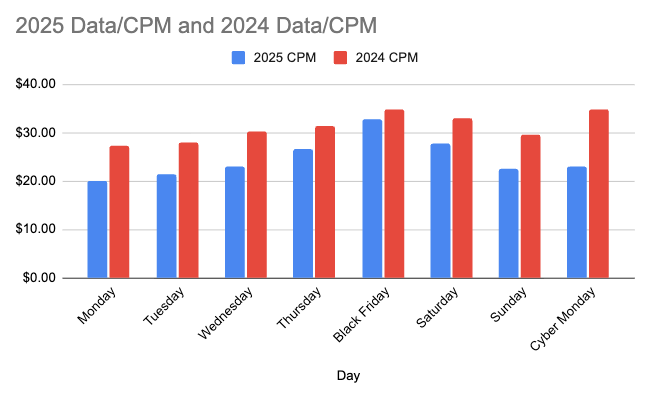
- CPMs heading into Black Friday week were significantly lower.
- On average, CPMs were 25% lower throughout the weekend, unlocking more reach and efficiency.
Starting early continues to be one of the simplest and most effective levers for cost management during high-pressure sales periods.
Simplifying Ad Rotation
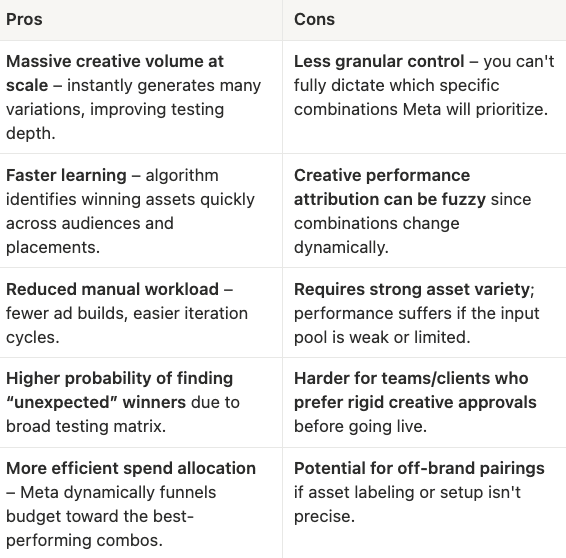
Historically, we’ve produced anywhere from 7 to 50 creatives per brand each Black Friday. While this gives us breadth, Meta rarely distributes spend evenly across that volume, resulting in wasted production hours and unstable learning cycles.
This year, we shifted to a more streamlined approach by heavily leveraging Flex Ads.
What Are Flex Ads?
Flex Ads allow us to upload multiple images, headlines, and CTAs that Meta automatically recombines into thousands of possible ad variations. The platform then prioritizes the combinations most likely to perform.
The result? Fast learning, deeper testing, and far more efficient scaling.
Why It Matters
Because all variations roll up into a single ad line-item, Meta is able to push through spend faster, stabilize the learning phase, and allocate budget more intelligently, without us constantly toggling ads on and off.
How We Applied It
- Single-product brands: Ads were grouped by concept or USP.
- Multi-product brands: Each PDP received its own set of rich, variable concepts within a single Flex Ad.
The overarching goal was simple: fewer manual overrides, fewer system resets, and more stable scaling during the highest-volume period of the year.
This is what it looks like in practice:
Ad-Set Structure
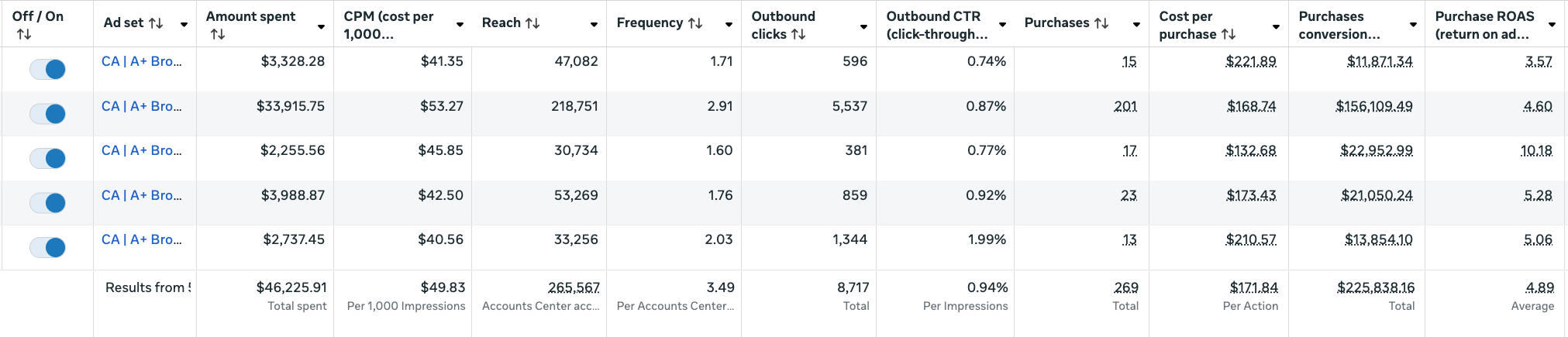
Ad Structure

Controlling Budget Schedules
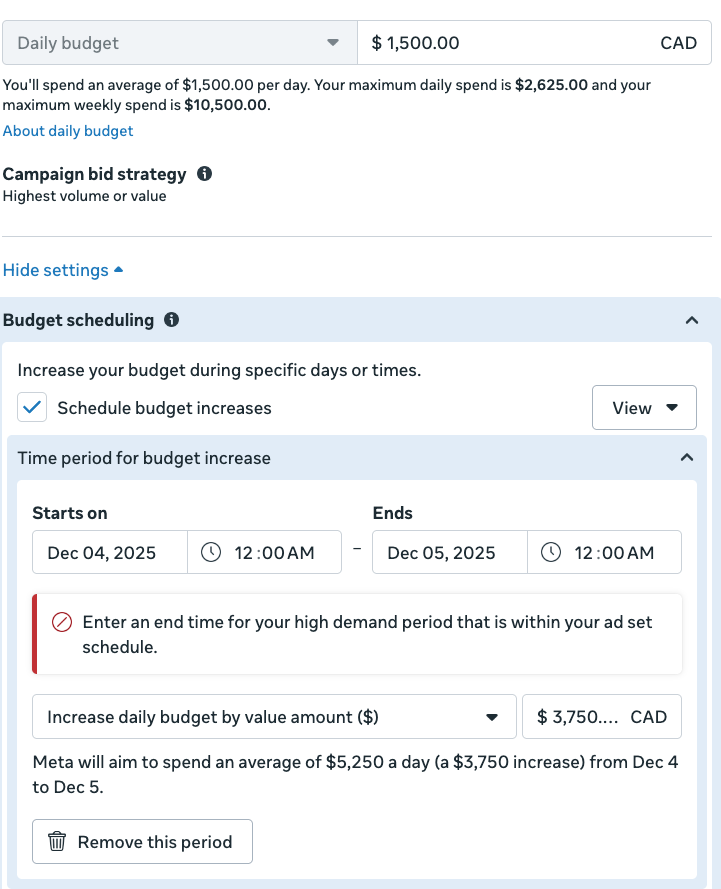
For three years, we’ve been adjusting budgets hour by hour during Black Friday to maximize performance. Historically, we relied on ABO, but frequent budget changes forced Meta into repeated re-ramp cycles that delayed learning.
To eliminate this friction, we introduced budget schedules at both the campaign and ad-set level.
What This Achieved
- Massive scaling without sending campaigns back into learning.
- Smooth, automated budget increases during peak windows.
- More reliable pacing across the full Black Friday Cyber Monday period.
- Instant decrease in budgets when peak spending windows end.
While we can’t prove this had a direct impact on CPMs, we can confidently say that it enabled a level of scale we haven’t seen in prior years.
This will remain a key tactic for future Black Friday activations and other high-volume sales events.