Andromeda Explained
Notes From Our In-Person Meeting With Meta
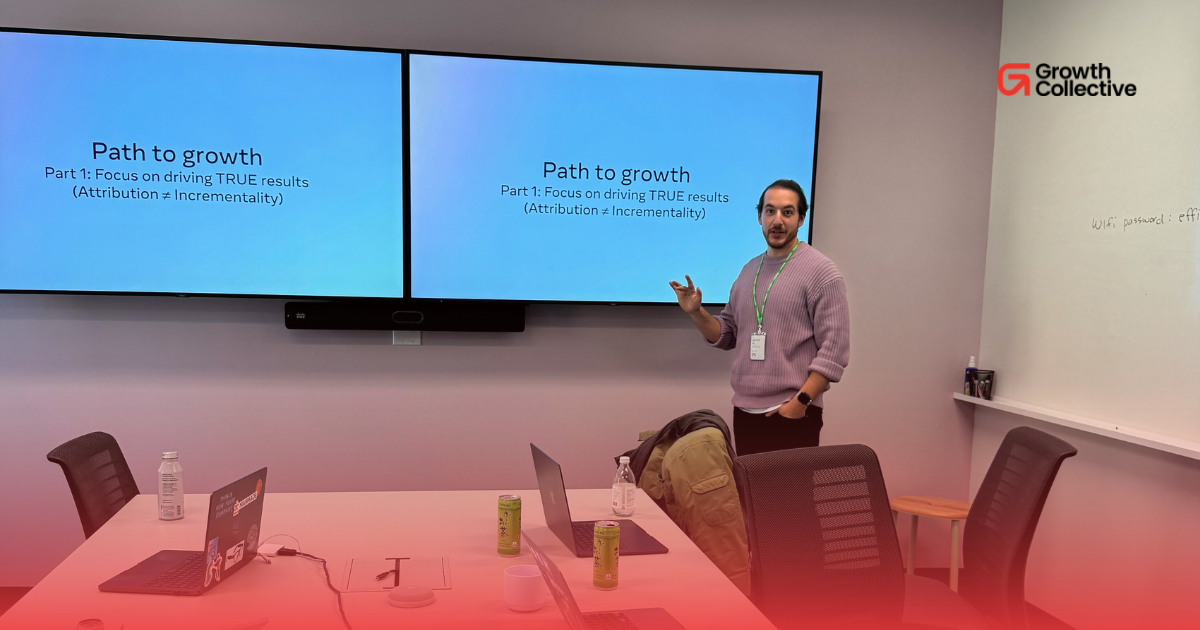
In January 2026, our team was blessed with the opportunity to meet our dedicated Meta reps in person at the Meta office in Toronto.
While influencers online do their best to describe what Andromeda is and how to be “compliant” with the algorithmic update, we went straight to the source and gained actionable insights you simply can’t get elsewhere.
What Changed With Andromeda?
Meta recently changed how its ad system works with an update called Andromeda - something you’ve all heard about.
Up until December 2025, ads were mostly shown based on groups advertisers selected through targeting, such as age, interests, or location.
With Andromeda, Meta now uses powerful AI to decide which ad is best for each person in real time, based on what they’re doing, watching, and interacting with at that exact moment.
Simply put: instead of focusing so much on who people are, the system focuses more on which ad they’re most likely to enjoy or respond to right now.
This means Meta cares less about strict targeting and much more about the quality and variety of the ads themselves.
Here’s a simple example:
Old Machine Learning Algorithm
“These ads are for people who like fitness: rotate 100% of my ads within my ad set.”
New Andromeda AI Algorithm
“This person is watching workout videos, this one likes funny content, and this one prefers tips: show each of them the most relevant ad within my ad set that they’ll resonate with.”
It’s hard to visualize the difference, so our team has put together a “before” and “after” version showcasing how the algorithm actually works:
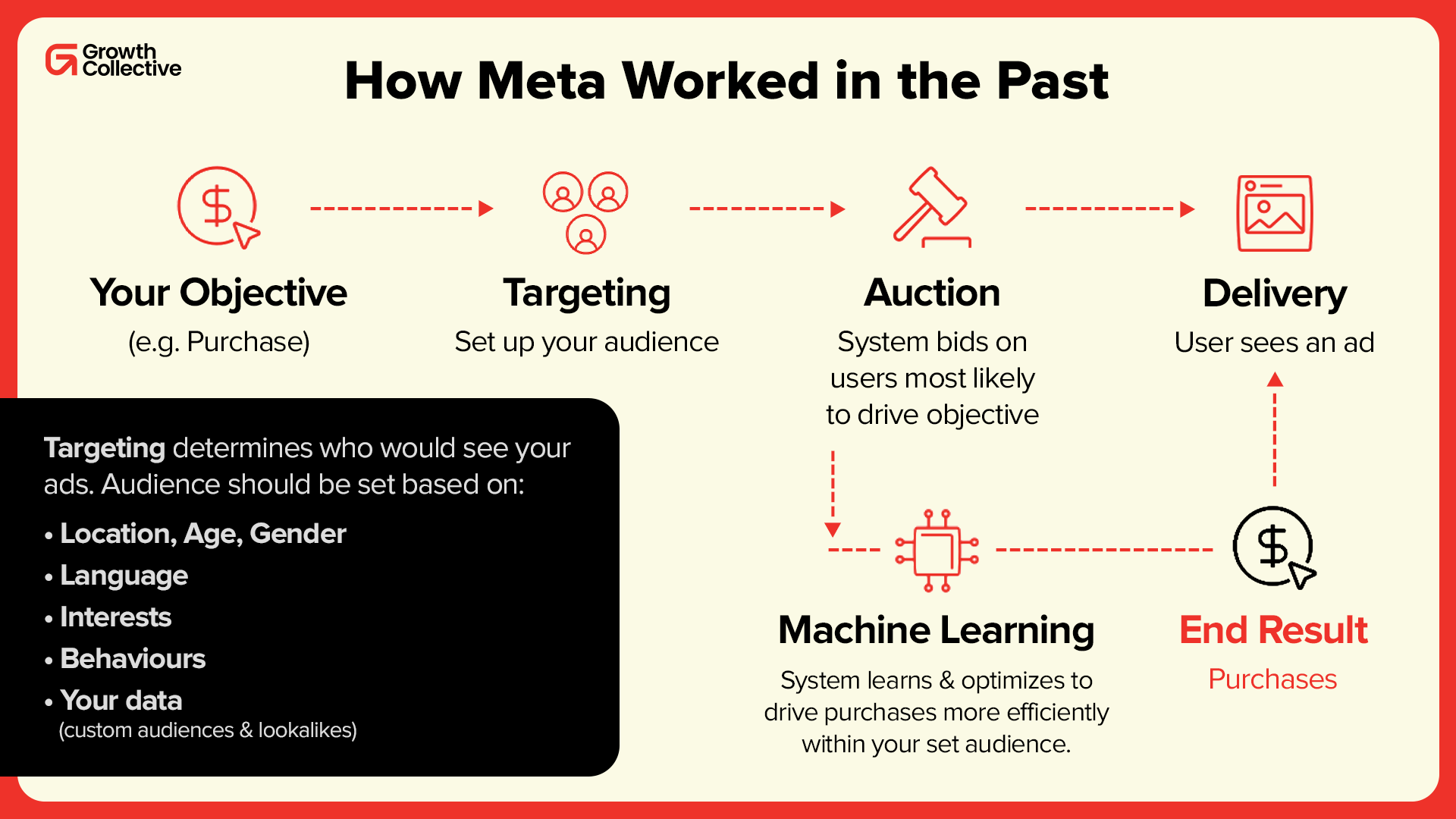
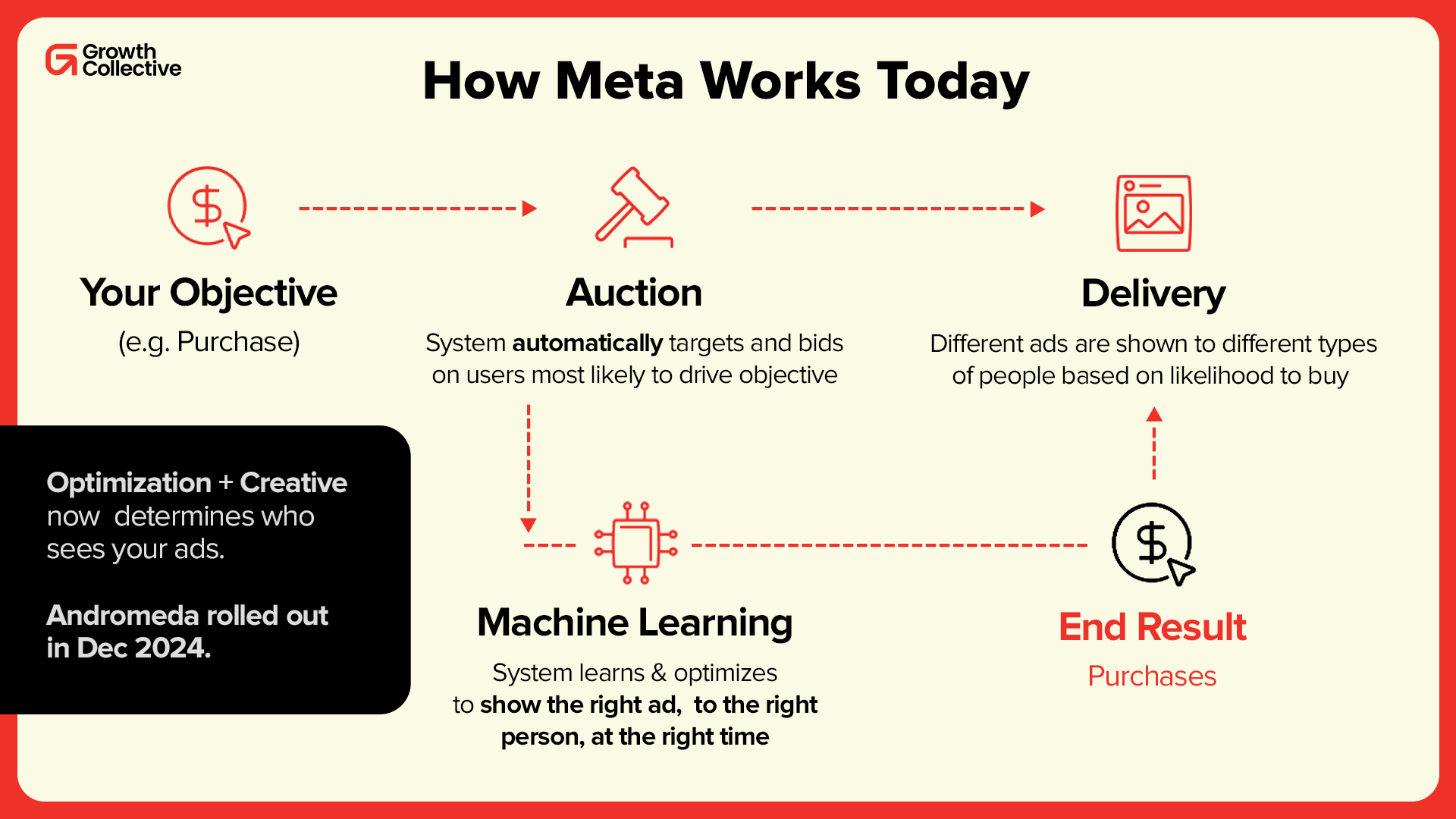
The downstream consequences of this change are massive. To be successful in media buying on the platform, advertisers now need to dramatically change their approach to both targeting and creative production, including volume and launch cadence.
Creative = The New Approach to Targeting
Ad reach used to be driven by targeting. If you didn’t select the “right” audience, you simply never reached them. Today, that’s no longer the case. Meta now recommends keeping targeting broad and letting creative do the work of targeting.
With the rollout of Andromeda, Meta’s algorithm analyzes nearly every element of an ad: from the script and on-screen text to the people featured, tone, pacing, and even color grading. Each creative asset sends signals that help the algorithm decide who should see it.
According to Meta, the more varied your creative is, the easier it becomes for the system to match the right ad with the right person.
In simple terms: performance now depends on running a creatively diverse campaign.
What does a creatively diverse campaign look like?
It goes far beyond using different formats like statics, carousels, slideshows, and video. A truly diverse campaign includes a mix of:
- Lo-fi assets (UGC-style content)
- Polished brand assets
- Multiple formats
- Multiple messages
- Different visual styles
Most advertisers handle the first three well. Where they tend to struggle is multiple messages, which is arguably the most important lever for unlocking new audience pockets.
At Growth Collective, we focus heavily on this. Our team uses customer motivators and barriers as a framework to generate new creative angles at scale. By addressing different reasons someone might buy (or hesitate to buy) we’re able to reach entirely new segments without changing targeting at all.
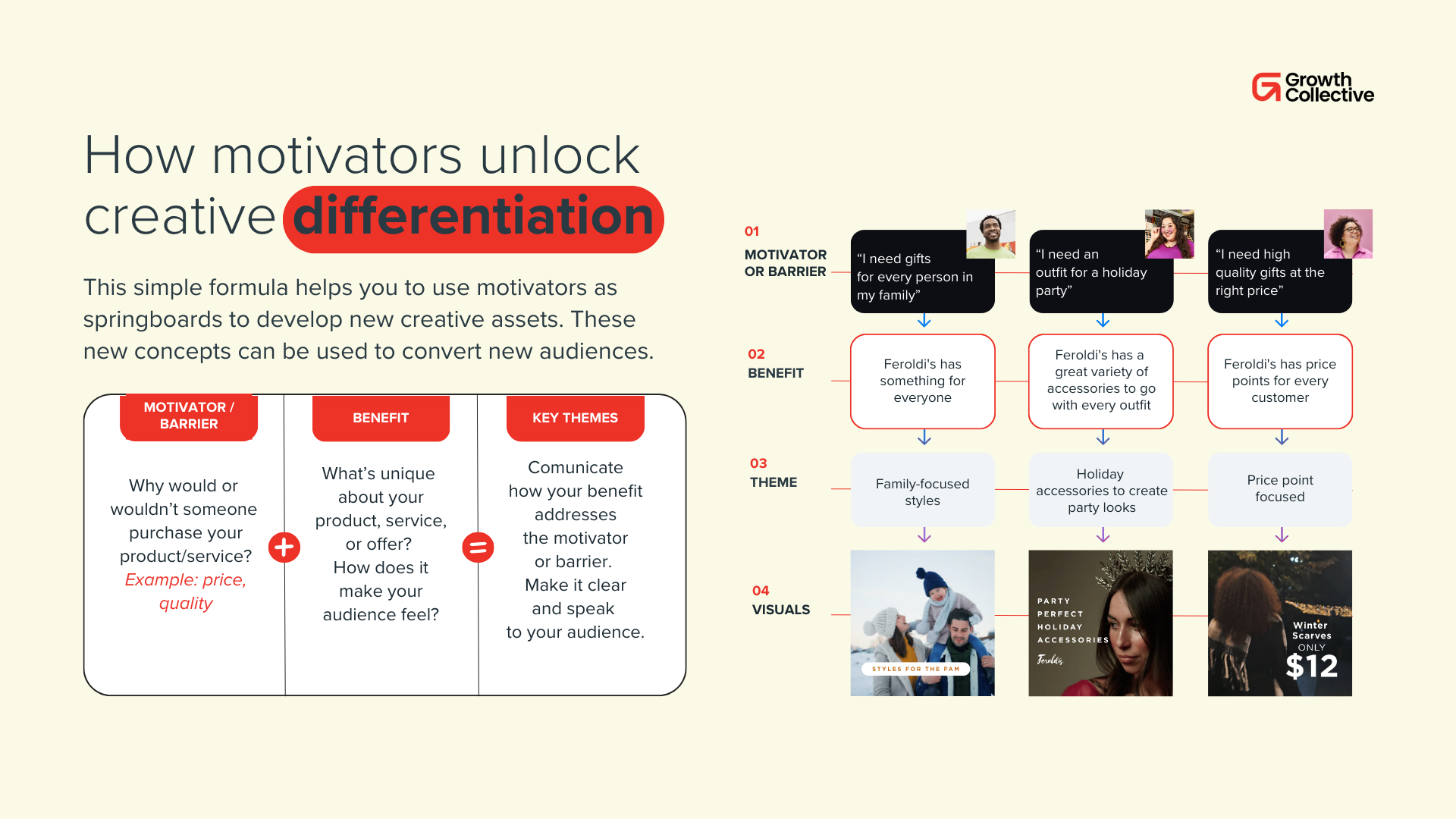
Send this framework to your creative strategist - it’s one of the fastest ways to improve Meta performance without increasing spend.
The Similarity Score
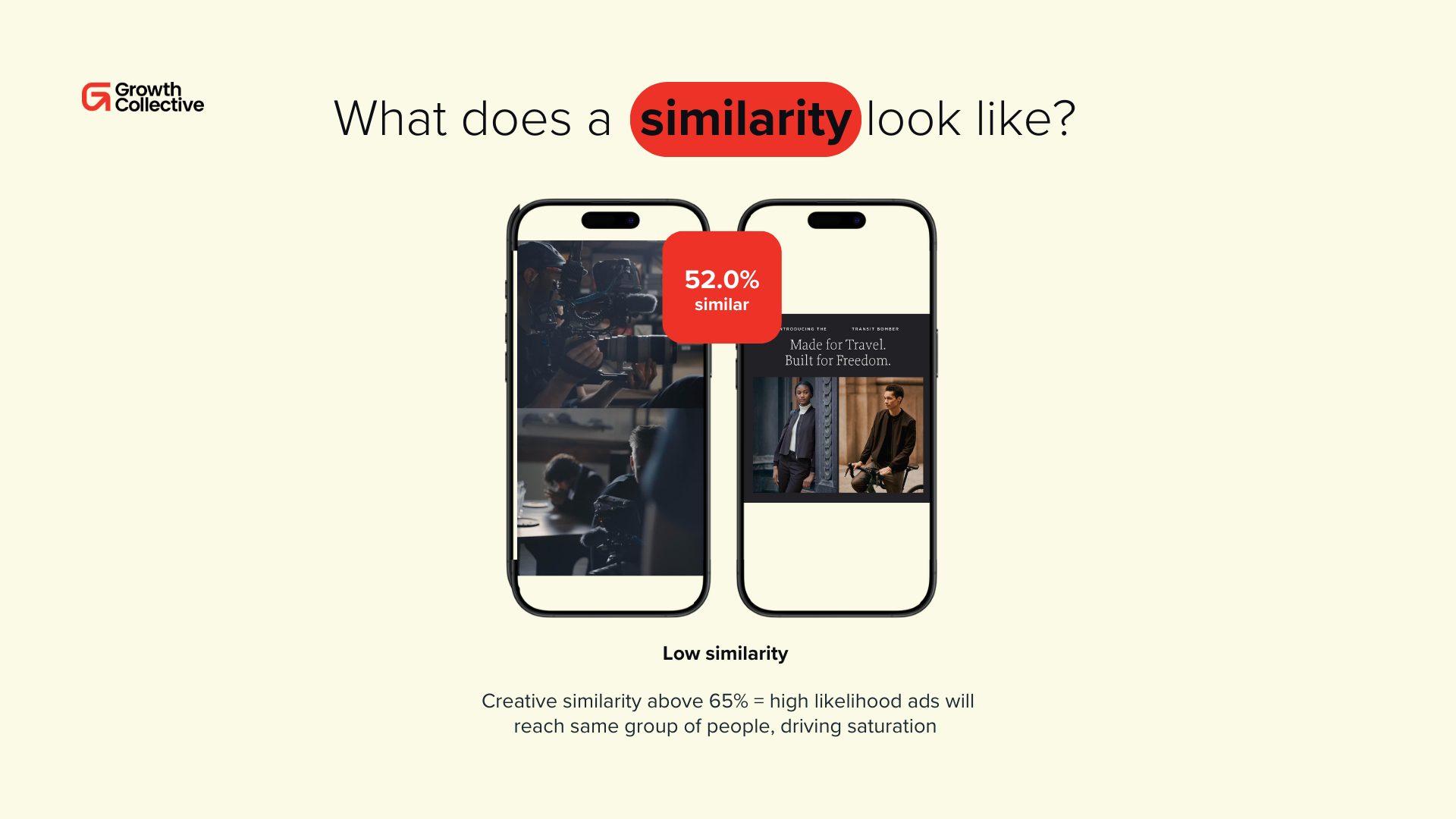
One of the most interesting (and frustrating) insights from our recent conversations with Meta was the concept of the creative similarity score.
Andromeda evaluates how similar your ad assets are to one another and assigns your account a score.
According to Meta, any account with a similarity score above 65% is highly likely to show ads to the same group of people - leading to faster saturation and weaker performance.
Meta was able to share our scores with us, which was incredibly helpful.
Naturally, two questions came up:
- How is similarity being measured? (format, visuals, headlines, tone, etc.)
- Can advertisers see this score directly?
The answer to the first question was unclear. Even Meta’s team only sees a single number and uses it directionally. As for the second, similarity scores are currently only available to managed advertisers and must be requested from a Meta rep. They do not appear in standard account health views.
It’s not ideal, but it’s a strong signal of where the platform is heading, and a clear reminder that creative variety is no longer optional.
Stay Ahead of Meta’s Evolution
If you want to stay ahead of how Meta’s platform is evolving, you can book a call to see how we’re applying these strategies across real accounts at Growth Collective.